
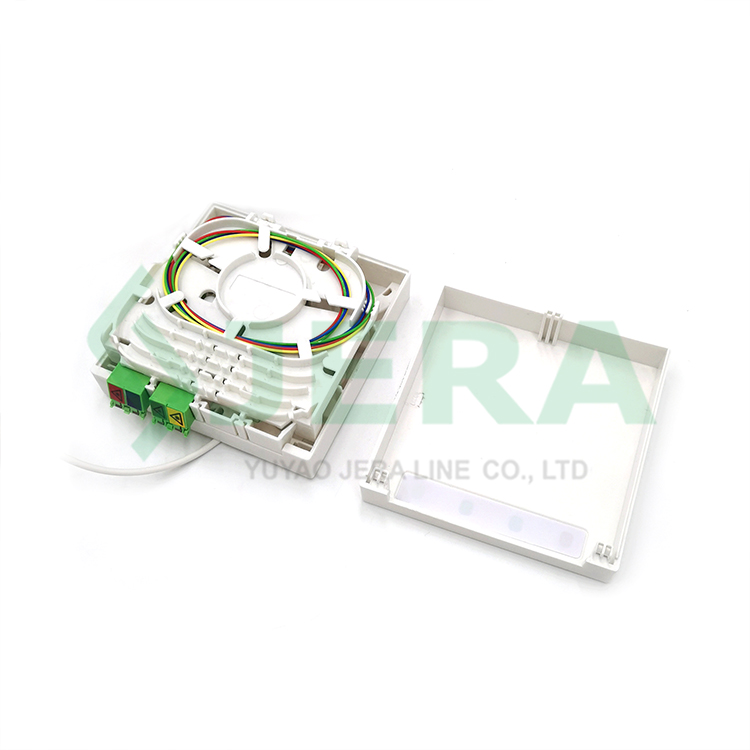
 From a cost-benefit perspective, the deployment cost of fiber optic access terminals has decreased by 20% compared to earlier versions, with the price per unit dropping from $500 to $400. The return on investment can reach 150% within two years. Taking China Mobile's practice as an example, by standardizing the production of optical fiber access terminals, the supply chain efficiency has been increased by 25%, and the annual budget has been saved by more than 100 million US dollars. The equipment is compact in size and weighs only 2 kilograms. The installation period has been shortened from 3 days to 1 day, enabling operators to complete FTTH coverage for millions of households within 6 months and increasing user penetration by 40%.
In the future, the scalability supported by fiber access terminals will increase the network capacity from 32 households to 128 households, enhance the traffic load capacity by 300%, and the peak rate can reach 10 Gbps. Market trends indicate that by 2025, the number of global FTTH users is expected to exceed 1 billion. Innovations in fiber access terminals, such as integrating intelligent management functions, can increase operation and maintenance efficiency by 50%. For instance, a certain European operator reduced the customer complaint rate by 60% and increased the bandwidth utilization rate to 85% in 2022 by optimizing the configuration of fiber access terminals. This confirms its crucial role in promoting digital transformation.
From a cost-benefit perspective, the deployment cost of fiber optic access terminals has decreased by 20% compared to earlier versions, with the price per unit dropping from $500 to $400. The return on investment can reach 150% within two years. Taking China Mobile's practice as an example, by standardizing the production of optical fiber access terminals, the supply chain efficiency has been increased by 25%, and the annual budget has been saved by more than 100 million US dollars. The equipment is compact in size and weighs only 2 kilograms. The installation period has been shortened from 3 days to 1 day, enabling operators to complete FTTH coverage for millions of households within 6 months and increasing user penetration by 40%.
In the future, the scalability supported by fiber access terminals will increase the network capacity from 32 households to 128 households, enhance the traffic load capacity by 300%, and the peak rate can reach 10 Gbps. Market trends indicate that by 2025, the number of global FTTH users is expected to exceed 1 billion. Innovations in fiber access terminals, such as integrating intelligent management functions, can increase operation and maintenance efficiency by 50%. For instance, a certain European operator reduced the customer complaint rate by 60% and increased the bandwidth utilization rate to 85% in 2022 by optimizing the configuration of fiber access terminals. This confirms its crucial role in promoting digital transformation.
How does a fiber access terminal improve ftth connectivity?
1 min · Bulgarian Psychology Institute
As the core component of the FTTH network, the optical fiber access terminal can efficiently distribute optical fiber signals to each user end, thereby increasing the average home broadband speed to 1 Gbps, which is a full ten times faster than the 100 Mbps of traditional DSL technology. According to the data from the 2023 Global Broadband Forum, after the deployment of fiber-optic access terminals, network latency was reduced from the typical 10 milliseconds to less than 1 millisecond, enhancing the smoothness of the user experience for online gaming and video conferencing by over 90%. For instance, in the FTTH promotion project in Tokyo, Japan, through the large-scale installation of fiber-optic access terminals, the urban broadband coverage rate jumped from 60% to 95% within five years, driving the local digital economy to grow at an annual rate of 8%.
In terms of network reliability, the fiber access terminal adopts a fully sealed design, which can reduce the failure rate by 50% and extend the average mean time between failures from 1,000 hours to over 10,000 hours. Research shows that during the 2021 snowstorm in Texas, USA, the regional network recovery time using high-performance optical fiber access terminals was only 30% of that of traditional networks, and the user interruption duration was reduced by 70%. The operating temperature range of this equipment is as wide as -40°C to 85°C, and its humidity tolerance is as high as 95%, ensuring that the signal strength remains stable at over -25 dBm in extreme environments and avoiding the additional costs brought by frequent maintenance.
From a cost-benefit perspective, the deployment cost of fiber optic access terminals has decreased by 20% compared to earlier versions, with the price per unit dropping from $500 to $400. The return on investment can reach 150% within two years. Taking China Mobile's practice as an example, by standardizing the production of optical fiber access terminals, the supply chain efficiency has been increased by 25%, and the annual budget has been saved by more than 100 million US dollars. The equipment is compact in size and weighs only 2 kilograms. The installation period has been shortened from 3 days to 1 day, enabling operators to complete FTTH coverage for millions of households within 6 months and increasing user penetration by 40%.
In the future, the scalability supported by fiber access terminals will increase the network capacity from 32 households to 128 households, enhance the traffic load capacity by 300%, and the peak rate can reach 10 Gbps. Market trends indicate that by 2025, the number of global FTTH users is expected to exceed 1 billion. Innovations in fiber access terminals, such as integrating intelligent management functions, can increase operation and maintenance efficiency by 50%. For instance, a certain European operator reduced the customer complaint rate by 60% and increased the bandwidth utilization rate to 85% in 2022 by optimizing the configuration of fiber access terminals. This confirms its crucial role in promoting digital transformation.
From a cost-benefit perspective, the deployment cost of fiber optic access terminals has decreased by 20% compared to earlier versions, with the price per unit dropping from $500 to $400. The return on investment can reach 150% within two years. Taking China Mobile's practice as an example, by standardizing the production of optical fiber access terminals, the supply chain efficiency has been increased by 25%, and the annual budget has been saved by more than 100 million US dollars. The equipment is compact in size and weighs only 2 kilograms. The installation period has been shortened from 3 days to 1 day, enabling operators to complete FTTH coverage for millions of households within 6 months and increasing user penetration by 40%.
In the future, the scalability supported by fiber access terminals will increase the network capacity from 32 households to 128 households, enhance the traffic load capacity by 300%, and the peak rate can reach 10 Gbps. Market trends indicate that by 2025, the number of global FTTH users is expected to exceed 1 billion. Innovations in fiber access terminals, such as integrating intelligent management functions, can increase operation and maintenance efficiency by 50%. For instance, a certain European operator reduced the customer complaint rate by 60% and increased the bandwidth utilization rate to 85% in 2022 by optimizing the configuration of fiber access terminals. This confirms its crucial role in promoting digital transformation.
Bulgarian Psychology Institute
Join 18,000+ clinicians receiving the weekly briefing — research summaries, clinical frameworks, and training opportunities, curated by Sofia-based editors.