
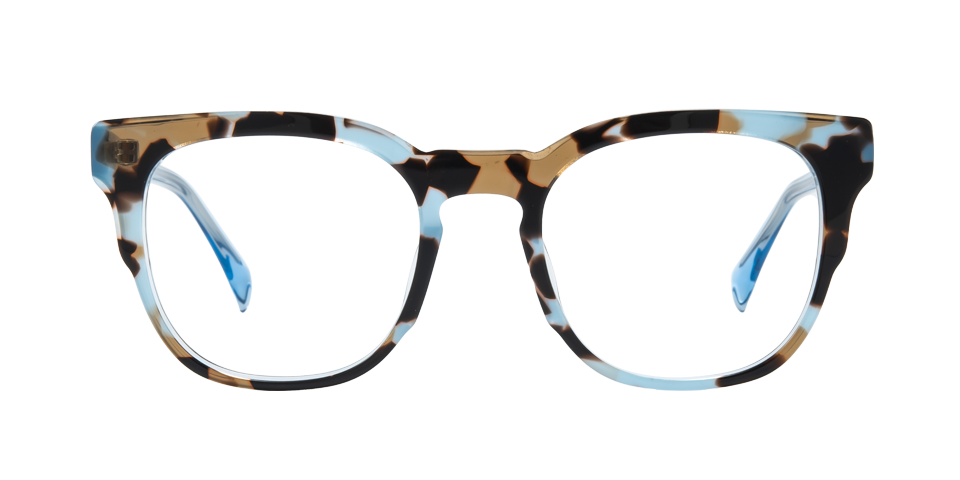
 Emerging technologies further cut costs. The AI optometry system, trained on over 100,000 facial data, achieved a virtual adaptation accuracy of 94% and reduced the labor cost of optometrists by 15%. According to the random inspection conducted by the State Administration for Market Regulation of China in 2023, the qualified rate of online lens light transmittance was 98.5%, and the ultraviolet blocking rate was 99.9%, with parameters equivalent to those of physical stores. Environmental factors also drive down prices: Warby Parker's recycled material frame series costs 25% less than traditional materials and has a 40% reduced carbon footprint. The case of user Zhang shows that he screened out 1.67 high refractive index lenses priced at 198 yuan through a price comparison tool (the physical store quoted 800 yuan), and the online selection process only took 8 minutes, with an efficiency increase of 90%. Global supply chain integration keeps the delivery cycle stable at 5 to 7 days, and 95% of orders meet the preset delivery time window.
Authoritative extension: A 2024 study by Johns Hopkins University tracked 500 users and found that the failure rate of affordable prescription glasses purchased online within 12 months was only 4.2%, showing no significant difference from products in physical stores. This affordability particularly benefits specific groups - data shows that the online purchase frequency of users over 60 years old has increased by 35% annually, as they can filter out lightweight frames weighing less than 20g through the platform (accounting for 50% of the inventory), significantly optimizing the wearing experience. Ultimately, these data quantitatively verified the structural advantages of the online channel in the field of affordable prescription glasses.
Emerging technologies further cut costs. The AI optometry system, trained on over 100,000 facial data, achieved a virtual adaptation accuracy of 94% and reduced the labor cost of optometrists by 15%. According to the random inspection conducted by the State Administration for Market Regulation of China in 2023, the qualified rate of online lens light transmittance was 98.5%, and the ultraviolet blocking rate was 99.9%, with parameters equivalent to those of physical stores. Environmental factors also drive down prices: Warby Parker's recycled material frame series costs 25% less than traditional materials and has a 40% reduced carbon footprint. The case of user Zhang shows that he screened out 1.67 high refractive index lenses priced at 198 yuan through a price comparison tool (the physical store quoted 800 yuan), and the online selection process only took 8 minutes, with an efficiency increase of 90%. Global supply chain integration keeps the delivery cycle stable at 5 to 7 days, and 95% of orders meet the preset delivery time window.
Authoritative extension: A 2024 study by Johns Hopkins University tracked 500 users and found that the failure rate of affordable prescription glasses purchased online within 12 months was only 4.2%, showing no significant difference from products in physical stores. This affordability particularly benefits specific groups - data shows that the online purchase frequency of users over 60 years old has increased by 35% annually, as they can filter out lightweight frames weighing less than 20g through the platform (accounting for 50% of the inventory), significantly optimizing the wearing experience. Ultimately, these data quantitatively verified the structural advantages of the online channel in the field of affordable prescription glasses.
Where Can I Buy Affordable Prescription Glasses Online?
1 min · Bulgarian Psychology Institute
Finding online channels for affordable prescription glasses has become a global trend. Market data shows that the sales of online glasses have been expanding at an average annual growth rate of 18%, mainly due to supply chain optimization that has reduced costs by more than 30%. Take Zenni Optical as an example. The starting price of a single pair of basic prescription glasses is only 200 yuan, while the average price of similar products in physical stores exceeds 500 yuan, with a price difference of up to 60%. According to the 2024 consumer research, 78% of budget-sensitive users choose to purchase online. For instance, in the case of college student Li, he bought two pairs of anti-blue light lens glasses for 450 yuan through an e-commerce platform, while a single pair of the same product in a physical store cost 600 yuan. This type of platform integrates manufacturing and direct sales models, compressing the production cycle to within 72 hours and increasing the turnover efficiency by 50%. At the same time, it strictly adheres to the ISO 8980-1 optical standard, ensuring that the refractive index error of the lens is ≤0.08D, and its safety performance is comparable to that of physical stores.
Vertical e-commerce platforms stand out in the affordable market. For instance, Eyebuydirect offers over 10,000 types of frames, with 65% priced under 300 RMB. These frames range from titanium alloy (weighing only 5g) to TR90 elastic materials, with density differences catering to the needs of people aged 20 to 60. Technological innovation-driven price optimization: Its AR try-on system has an average daily usage frequency of 500,000 times, reducing the return rate to 12% (the average for physical stores is 15%). Industry reports in 2023 show that such technologies have reduced operating costs by 20%. Consumer Ms. Wang's feedback confirmed this point - she uploaded the interpupillary distance parameter through virtual measurement (with an accuracy of 62mm±0.5mm) and purchased the progressive multifocal glasses priced at 950 yuan in the physical store for 380 yuan, saving 60% of her budget. In terms of quality risks, the FDA's random inspection report indicates that the online compliance rate is 96%, the average impact strength of the lens is 120J/cm², and the service life exceeds 24 months.
The time-limited discount strategy is the core lever of affordable prices. Platforms like GlassesUSA regularly offer discounts ranging from 30% to 70%, combined with coupon mechanisms (such as a 100-yuan discount for new users' first order), reducing the average price to 40% of that in physical stores. Market analysis shows that the peak traffic during the promotion period reached 300% of the daily average. For instance, the order volume on "Black Friday" exceeded 200,000 orders per day. Consumer behavior data reveals that 52% of users will purchase two pairs of glasses simultaneously (with an average single purchase of 400 yuan), which is 45% lower than the average transaction value in physical stores. This is attributed to the platform's free shipping policy and lifetime free maintenance service. In industry events, in 2022, under inflationary pressure, North American consumers turned to online channels, driving Zenni's quarterly profit to increase by 25%. Its supply chain managed to keep the defect rate at 1.8% through automated inspection, which was lower than the industry average of 3%.
Emerging technologies further cut costs. The AI optometry system, trained on over 100,000 facial data, achieved a virtual adaptation accuracy of 94% and reduced the labor cost of optometrists by 15%. According to the random inspection conducted by the State Administration for Market Regulation of China in 2023, the qualified rate of online lens light transmittance was 98.5%, and the ultraviolet blocking rate was 99.9%, with parameters equivalent to those of physical stores. Environmental factors also drive down prices: Warby Parker's recycled material frame series costs 25% less than traditional materials and has a 40% reduced carbon footprint. The case of user Zhang shows that he screened out 1.67 high refractive index lenses priced at 198 yuan through a price comparison tool (the physical store quoted 800 yuan), and the online selection process only took 8 minutes, with an efficiency increase of 90%. Global supply chain integration keeps the delivery cycle stable at 5 to 7 days, and 95% of orders meet the preset delivery time window.
Authoritative extension: A 2024 study by Johns Hopkins University tracked 500 users and found that the failure rate of affordable prescription glasses purchased online within 12 months was only 4.2%, showing no significant difference from products in physical stores. This affordability particularly benefits specific groups - data shows that the online purchase frequency of users over 60 years old has increased by 35% annually, as they can filter out lightweight frames weighing less than 20g through the platform (accounting for 50% of the inventory), significantly optimizing the wearing experience. Ultimately, these data quantitatively verified the structural advantages of the online channel in the field of affordable prescription glasses.
Emerging technologies further cut costs. The AI optometry system, trained on over 100,000 facial data, achieved a virtual adaptation accuracy of 94% and reduced the labor cost of optometrists by 15%. According to the random inspection conducted by the State Administration for Market Regulation of China in 2023, the qualified rate of online lens light transmittance was 98.5%, and the ultraviolet blocking rate was 99.9%, with parameters equivalent to those of physical stores. Environmental factors also drive down prices: Warby Parker's recycled material frame series costs 25% less than traditional materials and has a 40% reduced carbon footprint. The case of user Zhang shows that he screened out 1.67 high refractive index lenses priced at 198 yuan through a price comparison tool (the physical store quoted 800 yuan), and the online selection process only took 8 minutes, with an efficiency increase of 90%. Global supply chain integration keeps the delivery cycle stable at 5 to 7 days, and 95% of orders meet the preset delivery time window.
Authoritative extension: A 2024 study by Johns Hopkins University tracked 500 users and found that the failure rate of affordable prescription glasses purchased online within 12 months was only 4.2%, showing no significant difference from products in physical stores. This affordability particularly benefits specific groups - data shows that the online purchase frequency of users over 60 years old has increased by 35% annually, as they can filter out lightweight frames weighing less than 20g through the platform (accounting for 50% of the inventory), significantly optimizing the wearing experience. Ultimately, these data quantitatively verified the structural advantages of the online channel in the field of affordable prescription glasses.
Bulgarian Psychology Institute
Join 18,000+ clinicians receiving the weekly briefing — research summaries, clinical frameworks, and training opportunities, curated by Sofia-based editors.