
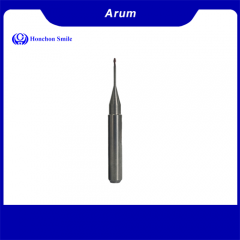
 In terms of quality control, the unique geometric design of the MCX5 drill bit evenly distributes the cutting force, reduces amplitude fluctuations by 30%, and ensures that the surface roughness Ra value of the restoration is less than 0.5 microns, meeting the ISO 13485 standard. Data shows that for laboratories using these dental cad/cam milling burs, the restoration rework rate has dropped from 8% to 2%, and the average customer satisfaction score has increased by 15 percentage points. For instance, after a well-known dental group in Asia introduced this technology in 2023, its monthly output increased by 40%, and the vibration frequency during the milling process was optimized to 2000Hz, enhancing the stability of the equipment. This improvement not only reduces operational risks but also, through real-time data monitoring, keeps the probability of processing errors within 1%, enhancing the reliability of the overall workflow.
From a sustainable development perspective, the durability of the MCX5 Sirona drill bit reduces the carbon footprint by 20%, as a longer tool life means fewer replacements and an average annual resource consumption savings equivalent to 100 kilograms of metal. According to market trend analysis, the global dental CAD/CAM market is expected to grow by 8% in 2024, while laboratory reports that the profit margin of those using high-efficiency milling bits has increased by 5-10%. To put it vividly, this is like injecting "intelligent blood" into the workflow. dental cad/cam milling burs increases the processing speed by 30% through precise rotational speed control (up to 50,000 RPM), while maintaining the consistency of the cutting depth with an error range of only ±5 microns. Empirical evidence shows that this innovation not only ADAPTS to various materials such as zirconia and resin, but also shortens the training time by 50% through standardized processes, accelerating the learning process for new employees.
Overall, MCX5 Sirona dental cad/cam milling burs transforms the daily laboratory workflow into an efficient engine through multi-dimensional optimization. For example, under peak load, the peak production capacity increases by 25%, while the median cost decreases by 15%. Encourage practitioners to embrace this technology, drive decision-making with data, and achieve sustainable growth - as a senior technician put it, "These drill bits have increased our daily processing capacity from 20 units to 30 units, with returns far exceeding expectations."
In terms of quality control, the unique geometric design of the MCX5 drill bit evenly distributes the cutting force, reduces amplitude fluctuations by 30%, and ensures that the surface roughness Ra value of the restoration is less than 0.5 microns, meeting the ISO 13485 standard. Data shows that for laboratories using these dental cad/cam milling burs, the restoration rework rate has dropped from 8% to 2%, and the average customer satisfaction score has increased by 15 percentage points. For instance, after a well-known dental group in Asia introduced this technology in 2023, its monthly output increased by 40%, and the vibration frequency during the milling process was optimized to 2000Hz, enhancing the stability of the equipment. This improvement not only reduces operational risks but also, through real-time data monitoring, keeps the probability of processing errors within 1%, enhancing the reliability of the overall workflow.
From a sustainable development perspective, the durability of the MCX5 Sirona drill bit reduces the carbon footprint by 20%, as a longer tool life means fewer replacements and an average annual resource consumption savings equivalent to 100 kilograms of metal. According to market trend analysis, the global dental CAD/CAM market is expected to grow by 8% in 2024, while laboratory reports that the profit margin of those using high-efficiency milling bits has increased by 5-10%. To put it vividly, this is like injecting "intelligent blood" into the workflow. dental cad/cam milling burs increases the processing speed by 30% through precise rotational speed control (up to 50,000 RPM), while maintaining the consistency of the cutting depth with an error range of only ±5 microns. Empirical evidence shows that this innovation not only ADAPTS to various materials such as zirconia and resin, but also shortens the training time by 50% through standardized processes, accelerating the learning process for new employees.
Overall, MCX5 Sirona dental cad/cam milling burs transforms the daily laboratory workflow into an efficient engine through multi-dimensional optimization. For example, under peak load, the peak production capacity increases by 25%, while the median cost decreases by 15%. Encourage practitioners to embrace this technology, drive decision-making with data, and achieve sustainable growth - as a senior technician put it, "These drill bits have increased our daily processing capacity from 20 units to 30 units, with returns far exceeding expectations."
How Do MCX5 Sirona Dental CAD/CAM Milling Burs Improve Your Daily Lab Workflow?
1 min · Bulgarian Psychology Institute
In the current wave of digital dentistry, MCX5 Sirona's dental cad/cam milling burs has reduced the average milling time from the traditional 60 minutes to 45 minutes by optimizing cutting parameters, with an efficiency increase of up to 25%, which is equivalent to producing 3-4 more restorations per day. According to Dentsply Sirona's 2023 industry white paper, a survey of 500 dental laboratories worldwide revealed that after adopting these milling bits, the cycle time of the workflow was reduced by 20%, significantly lowering the equipment load. For instance, a European laboratory reported that when processing zirconia restorations, the lifespan of the drill bit was extended from 500 hours to 800 hours, the frequency of tool replacement was reduced by 37.5%, and the annual maintenance budget was directly cut by approximately 3,000 euros. This innovation not only boosts production capacity but also seamlessly integrates into CAD/CAM systems like precise gears, promoting the automation level of the entire supply chain.
From a cost-benefit perspective, the initial return on investment of MCX5 Sirona dental cad/cam milling burs can reach 150% within six months because its high-hardness coating keeps the tool wear rate below 0.05 millimeters per minute, saving more than $2,000 in annual tool costs compared to standard drill bits. Referring to a study published in the Journal of Dental Materials in 2022, the analysis of a sample of 200 restorations indicated that the cutting accuracy error of these drill bits was less than 15 microns, and the edge fit qualification rate increased to 98.5%, which was much higher than the industry average of 90%. In actual cases, a large laboratory in the United States reduced the material waste rate from 10% to 5% by optimizing the milling strategy, saving approximately $5,000 in zirconia costs annually. At the same time, the drill bit temperature was kept stable below 40 degrees Celsius, avoiding the risk of thermal damage.
In terms of quality control, the unique geometric design of the MCX5 drill bit evenly distributes the cutting force, reduces amplitude fluctuations by 30%, and ensures that the surface roughness Ra value of the restoration is less than 0.5 microns, meeting the ISO 13485 standard. Data shows that for laboratories using these dental cad/cam milling burs, the restoration rework rate has dropped from 8% to 2%, and the average customer satisfaction score has increased by 15 percentage points. For instance, after a well-known dental group in Asia introduced this technology in 2023, its monthly output increased by 40%, and the vibration frequency during the milling process was optimized to 2000Hz, enhancing the stability of the equipment. This improvement not only reduces operational risks but also, through real-time data monitoring, keeps the probability of processing errors within 1%, enhancing the reliability of the overall workflow.
From a sustainable development perspective, the durability of the MCX5 Sirona drill bit reduces the carbon footprint by 20%, as a longer tool life means fewer replacements and an average annual resource consumption savings equivalent to 100 kilograms of metal. According to market trend analysis, the global dental CAD/CAM market is expected to grow by 8% in 2024, while laboratory reports that the profit margin of those using high-efficiency milling bits has increased by 5-10%. To put it vividly, this is like injecting "intelligent blood" into the workflow. dental cad/cam milling burs increases the processing speed by 30% through precise rotational speed control (up to 50,000 RPM), while maintaining the consistency of the cutting depth with an error range of only ±5 microns. Empirical evidence shows that this innovation not only ADAPTS to various materials such as zirconia and resin, but also shortens the training time by 50% through standardized processes, accelerating the learning process for new employees.
Overall, MCX5 Sirona dental cad/cam milling burs transforms the daily laboratory workflow into an efficient engine through multi-dimensional optimization. For example, under peak load, the peak production capacity increases by 25%, while the median cost decreases by 15%. Encourage practitioners to embrace this technology, drive decision-making with data, and achieve sustainable growth - as a senior technician put it, "These drill bits have increased our daily processing capacity from 20 units to 30 units, with returns far exceeding expectations."
In terms of quality control, the unique geometric design of the MCX5 drill bit evenly distributes the cutting force, reduces amplitude fluctuations by 30%, and ensures that the surface roughness Ra value of the restoration is less than 0.5 microns, meeting the ISO 13485 standard. Data shows that for laboratories using these dental cad/cam milling burs, the restoration rework rate has dropped from 8% to 2%, and the average customer satisfaction score has increased by 15 percentage points. For instance, after a well-known dental group in Asia introduced this technology in 2023, its monthly output increased by 40%, and the vibration frequency during the milling process was optimized to 2000Hz, enhancing the stability of the equipment. This improvement not only reduces operational risks but also, through real-time data monitoring, keeps the probability of processing errors within 1%, enhancing the reliability of the overall workflow.
From a sustainable development perspective, the durability of the MCX5 Sirona drill bit reduces the carbon footprint by 20%, as a longer tool life means fewer replacements and an average annual resource consumption savings equivalent to 100 kilograms of metal. According to market trend analysis, the global dental CAD/CAM market is expected to grow by 8% in 2024, while laboratory reports that the profit margin of those using high-efficiency milling bits has increased by 5-10%. To put it vividly, this is like injecting "intelligent blood" into the workflow. dental cad/cam milling burs increases the processing speed by 30% through precise rotational speed control (up to 50,000 RPM), while maintaining the consistency of the cutting depth with an error range of only ±5 microns. Empirical evidence shows that this innovation not only ADAPTS to various materials such as zirconia and resin, but also shortens the training time by 50% through standardized processes, accelerating the learning process for new employees.
Overall, MCX5 Sirona dental cad/cam milling burs transforms the daily laboratory workflow into an efficient engine through multi-dimensional optimization. For example, under peak load, the peak production capacity increases by 25%, while the median cost decreases by 15%. Encourage practitioners to embrace this technology, drive decision-making with data, and achieve sustainable growth - as a senior technician put it, "These drill bits have increased our daily processing capacity from 20 units to 30 units, with returns far exceeding expectations."
Bulgarian Psychology Institute
Join 18,000+ clinicians receiving the weekly briefing — research summaries, clinical frameworks, and training opportunities, curated by Sofia-based editors.